Cottonseed Cow Feed: Benefits, Nutritional Value & Uses
Cottonseed cow feed can be a useful part of a dairy cow’s feeding program when included in suitable amounts and combined with other feed ingredients. Cottonseed provides protein, fat, fiber, and energy, which can help complement the nutritional needs of dairy cows. However, the value of cottonseed depends on the overall ration, feed quality, cow’s production stage, and proper feeding management.
Farmers should consider cottonseed as one component of a complete diet that may include green fodder, dry fodder for cows, concentrate feed, minerals, and clean water. This guide explains what cottonseed is, its nutritional value, potential benefits, common uses, and important factors to consider when adding it to a cow’s diet.
What Is Cottonseed Cow Feed?
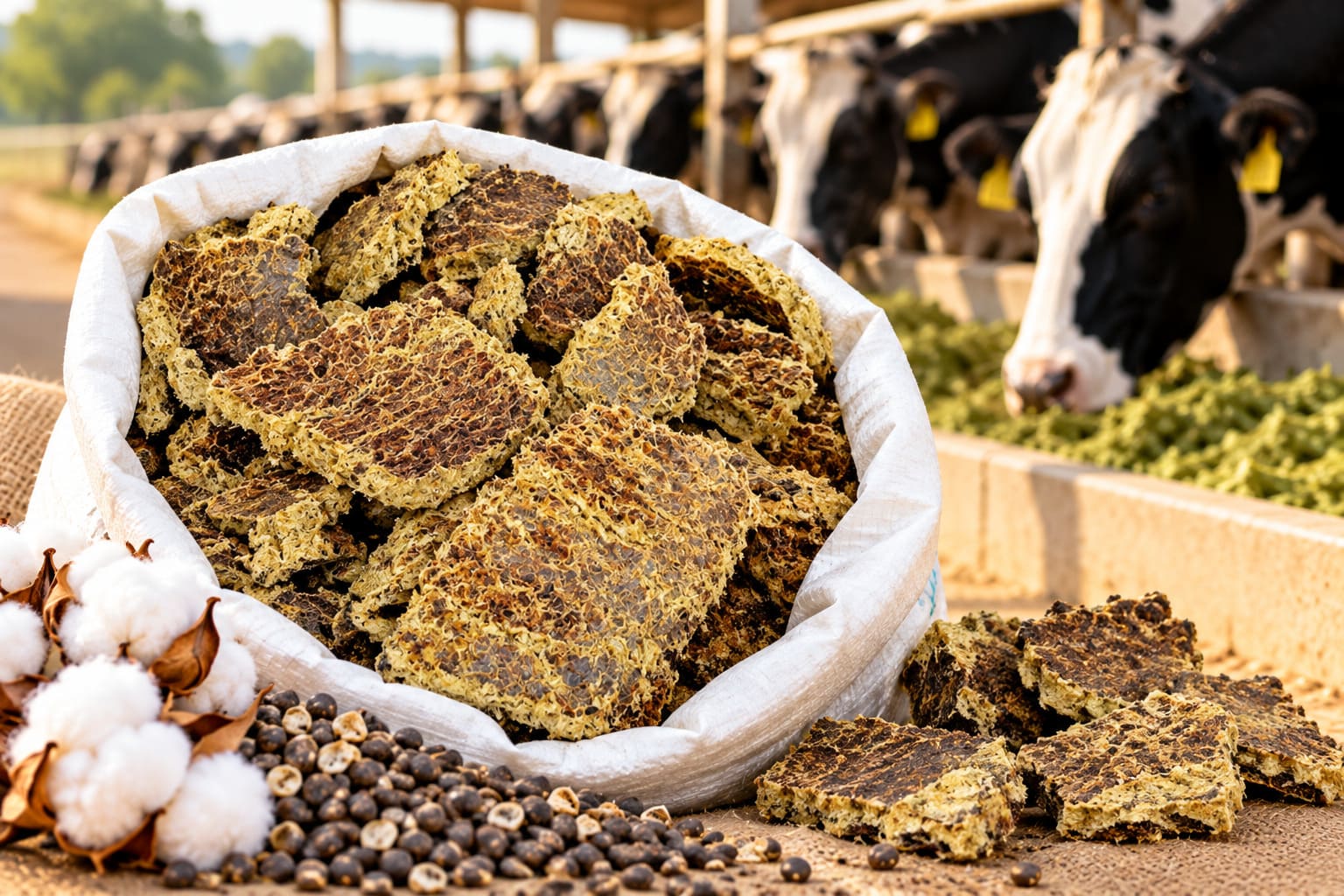
Cottonseed cow feed refers to the use of cottonseed or processed cottonseed products as feed ingredients for cattle. Whole cottonseed contains protein, fat, fiber, and energy, making it a relatively nutrient-dense feed ingredient. Cottonseed can therefore be incorporated into dairy rations when its nutritional contribution fits the animal’s overall requirements.
Common cottonseed-based feed materials include whole cottonseed for cattle, cottonseed meal, and cottonseed cake for cattle. These products differ in their nutrient composition and should not automatically be treated as interchangeable.
For dairy farmers, cottonseed may be used as part of cow cattle feed, particularly where additional protein and energy are required. The exact amount and type should depend on the cow’s ration, production level, forage quality, and feed formulation.
Is Cottonseed Good for Cows?
Yes, cottonseed can be a useful feed ingredient for adult cattle when it is properly selected, stored, and included in a balanced ration. Whole cottonseed is relatively rich in protein, fat, and fiber, allowing it to contribute both nutrients and energy to cattle diets.
However, cottonseed is not suitable as the only feed for dairy cows. A cow still needs adequate forage, energy, protein, minerals, vitamins, and water. The amount can vary and excessive exposure can create health risks, making feed quality and appropriate inclusion important.
For this reason, cottonseed should be used as part of a properly balanced ration rather than simply added in large amounts because it appears nutrient-rich.
What Nutrients Does Cottonseed Provide?
Cottonseed can contribute several important nutrients to a dairy cow’s diet.
- Protein
Protein supports tissue maintenance, muscle development, body functions, and milk production. Cottonseed and cottonseed-based products can contribute protein to the overall ration.
- Fat
Whole cottonseed contains a relatively high level of fat compared with many common feed ingredients. This can increase the energy density of the diet when used appropriately.
- Fiber
Cottonseed also contains fiber, which can contribute to the roughage component of a ration. Even so, suitable forage should remain an important part of the diet.
- Energy
The combination of fat, protein, and other nutrients allows cottonseed to contribute energy to the ration. This can be useful for dairy cows with higher nutritional demands, provided the complete ration remains balanced.
- Minerals and Other Nutrients
Cottonseed contributes some minerals and other nutrients, but it should not be considered a complete mineral source. Depending on the ration, farmers may still need a suitable cow supplement or mineral mixture.
What Are the Benefits of Cottonseed Cow Feed?
When appropriately included in a balanced ration, cottonseed cow feed can provide several nutritional and practical benefits.
- Provides Protein
Cottonseed can contribute protein to dairy cow diets, helping support normal body maintenance and productive functions.
- Supplies Energy
Its fat content can increase dietary energy density, which may be useful when formulating rations for productive dairy animals.
- Complements Concentrate Feed
Cottonseed can be included alongside other ingredients in concentrated feed for cows. Its nutritional profile can complement grains, protein meals, forage, and other feed ingredients.
- Supports Feed Formulation
Because cottonseed provides more than one type of nutrient, it can be used as one component of a cow feed mix designed to meet the nutritional requirements of dairy cows.
- Can Support Dairy Nutrition
A well-balanced diet is important for body condition, health, and productive performance. Cottonseed may contribute useful nutrients, but its effect depends on the complete ration and management rather than the ingredient alone.
How Does Cottonseed Support Milk Production?
Milk production depends on factors such as genetics, stage of lactation, health, body condition, forage quality, water intake, feeding management, and the nutrients supplied by the complete diet. Cottonseed cow feed can contribute protein, fat, fiber, and energy to a dairy ration, helping meet some of the higher nutritional demands of lactating cows, but it should be used as part of a balanced feeding program rather than as a standalone solution for increasing milk production.
Farmers looking for the best feed for cows to increase milk should focus on the complete ration, including suitable green fodder, dry cattle feed, concentrate feed, minerals, clean water, and proper management. Feed ingredients containing fat can also influence milk composition, but the overall response depends on the complete diet and feeding system. Farmers should therefore consider milk yield, milk fat, body condition, feed intake, and overall animal health when evaluating the feeding program.
Brahmi Cattle Feed – Quality Nutrition for Dairy Cows
Brahmi Cattle Feed provides practical feed solutions for dairy farmers, with a focus on quality nutrition, selected ingredients, consistent feed production, and convenient feed formats. For farmers managing dairy cows, quality feed should be considered as part of a complete program that includes forage, clean water, proper management, and animal-specific nutritional planning.
Brahmi’s feed products can complement the nutritional needs of dairy animals when selected according to their age, body condition, production stage, and overall ration. For farmers comparing cow feed products, the nutritional profile and suitability of the feed should be considered alongside ingredient quality and feeding recommendations.
How Should Cottonseed Cow Feed Be Used in a Cow’s Diet?
Cottonseed cow feed should be included according to the cow’s nutritional needs and the composition of the complete ration rather than being treated as a complete diet. Farmers should introduce it gradually and monitor feed intake, digestion, body condition, and milk production, while clearly identifying whether they are using whole cottonseed, cottonseed meal, or cottonseed cake.
Cottonseed should be sourced reliably and used according to appropriate feeding guidance, as free gossypol levels can vary. It can be combined with green fodder, dry feed for cows, grains, protein sources, mineral mixtures, and other ingredients to create a balanced cow feed mix.
What Should Farmers Consider Before Feeding Cottonseed?
Before adding cottonseed to a dairy cow’s ration, farmers should consider several factors.
1.Feed Quality
Use clean, good-quality cottonseed or cottonseed-based products that are suitable for cattle feeding. Avoid feed that is contaminated, spoiled, or improperly stored.
2.Gossypol Levels
Gossypol is a natural compound in cottonseed, and free gossypol levels can vary. Excessive exposure can cause health problems, so cottonseed cow feed should be used carefully and according to suitable feeding guidance.
3.Amount Fed
More feed is not always better. Cottonseed should be included at a level appropriate for the cow’s complete ration, production stage, and nutritional requirements.
4.Complete Ration
Cottonseed should complement forage and other feed ingredients rather than replace the entire diet. The ration should provide suitable protein, energy, fiber, vitamins, minerals, and water.
5.Animal-Specific Needs
Lactating cows, dry cows, growing animals with different body conditions may require different feeding programs. Farmers should avoid using the same ration for every animal without considering these differences. The quantity and use of cottonseed cow feed should also be adjusted according to the animal’s nutritional needs, production stage, and overall diet.
Why Choose Brahmi Cattle Feed for Quality Nutrition?
Brahmi Cattle Feed focuses on balanced nutrition, quality ingredients, consistent manufacturing, and practical feed solutions for dairy farmers. Its feed products are designed to complement the nutritional requirements of dairy animals and can be incorporated into feeding programs based on the animal’s needs.
Key considerations include:
- Balanced Nutrition: Feed products are formulated to provide important nutrients such as protein, energy, fiber, vitamins, and minerals. They are designed to complement forage and other components of the complete ration.
- Quality Ingredients: Carefully selected ingredients contribute to nutritional value, palatability, and consistent feed quality. Ingredient selection is an important part of providing reliable nutrition to dairy animals.
- Practical Feed Formats: Convenient feed formats can make daily feeding easier by simplifying handling, storage, transportation, and portioning. They can also help farmers manage feed more efficiently.
- Consistent Quality: Controlled manufacturing practices and regular quality checks help maintain consistency between feed batches. Consistent feed quality makes it easier for farmers to provide reliable nutrition.
- Dairy-Focused Solutions: Feed products are developed to complement the nutritional needs of dairy cows at different stages and production levels. They can be included as part of a complete feeding program based on individual animal requirements.
- Farmer Convenience: Practical feed solutions can simplify everyday feeding and feed management. This allows farmers to focus on maintaining a balanced ration along with good forage, clean water, and proper animal care.
Whether farmers are looking for cottonseed cow feed or a suitable cow supplement, the product should always be evaluated according to the cow’s nutritional needs and complete feeding program.
Support Better Dairy Nutrition with Brahmi
Healthy dairy cows need a complete nutritional approach rather than dependence on a single ingredient or feed product. Suitable green fodder, dry fodder for cows, concentrate feed, minerals and routine health management all contribute to a strong feeding program.
Brahmi Cattle Feed offers practical cow feed products designed to complement dairy nutrition with quality ingredients and consistent feed value. Farmers can consider nutritional quality, consistency, handling, and suitability when selecting their regular feed source.
Contact Information
Brahmi Cattle Feed
Address: Village Nanhera, Tehsil Rajpura, Punjab, India – 140147
Call: 9592046590
Email: brahmioffice@gmail.com
Conclusion
Cottonseed cow feed can provide useful protein, fat, fiber, and energy as part of a properly balanced dairy ration. Its benefits depend on the quality of the cottonseed, the amount included, the cow’s nutritional requirements, and the other feeds provided alongside it.
Farmers should avoid relying on cottonseed alone and instead follow a complete feeding program with suitable forage, concentrate feed, minerals, clean water, and proper management. Brahmi Cattle Feed can complement this approach by providing quality feed options, while cottonseed-based products should be selected and used with attention to product quality, storage and appropriate feeding guidance.
FAQs – Cottonseed Cow Feed: Benefits, Nutritional Value & Uses
Q1. Is cottonseed good for cows?
Ans. Yes, cottonseed can be a useful feed ingredient for adult dairy cows because it provides protein, fat, fiber, and energy. It should be fed appropriately as part of a balanced ration rather than as the sole feed.
Q2. Which is the best feed for cows?
Ans. The best feed for cows depends on the animal’s age, body condition, milk production stage, forage availability, and nutritional requirements. A balanced combination of forage, concentrate feed, minerals, vitamins, and clean water is generally more important than one individual ingredient.
Q3. What are the nutritional benefits of cottonseed cow feed?
Ans. Cottonseed cow feed can provide protein, fat, fiber, and energy. These nutrients can complement the dietary requirements of dairy cows when cottonseed is included appropriately in a balanced feeding program.
Q4. Which feed increases cow milk fat?
Ans. No single feed can guarantee higher milk fat. Milk fat depends on genetics, stage of lactation, and the complete diet. Feed ingredients containing fat can influence milk composition, but the overall ration and feeding balance are important.
Q5. How should cottonseed cow feed be used in a cow’s diet?
Ans. Cottonseed should be used as part of a balanced ration along with forage and other suitable feed ingredients. Farmers should introduce it appropriately, follow feeding guidance, and consider cottonseed quality and gossypol levels before feeding.