
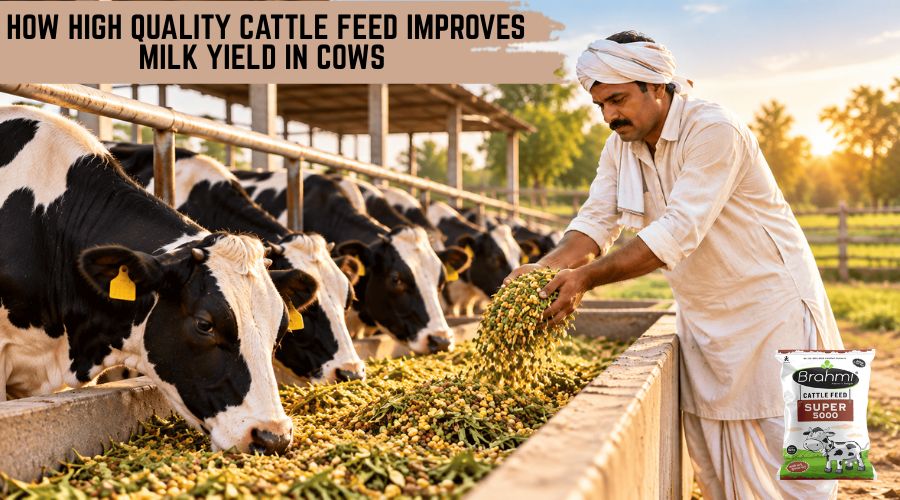
How High Quality Cattle Feed Improves Milk Yield in Cows
High quality cattle feed provides dairy cows with important nutrients such as protein, energy, fiber, vitamins, and minerals needed for health and milk production. When included in a balanced feeding program, quality feed can support digestion, body condition, nutrient utilization, and consistent milk yield.
Choosing the right high quality cattle feed depends on the cow’s age, body weight, milk production, stage of lactation, health, and overall diet. This guide explains how feed quality can support milk production, which nutrients cows need, and what farmers should consider when selecting dairy cow feed.
What Is High Quality Cattle Feed?
High quality cattle feed is formulated to provide essential nutrients in appropriate amounts for dairy cows. It may contain ingredients such as grains, protein sources, fiber, vitamins, minerals, and other nutritional components required as part of a complete feeding program.
Good feed quality is not determined by one ingredient alone. Farmers should consider the nutritional value, ingredient quality, consistency, digestibility, manufacturing practices, and suitability of the feed for their animals.
How Does High Quality Cattle Feed Improve Milk Yield?
Milk production requires a regular supply of nutrients. Cows use energy, protein, minerals, vitamins, and water for body maintenance as well as milk production, making proper nutrition especially important during lactation.
A suitable dairy cattle feed can complement forage by supplying concentrated nutrients that may be limited in the existing diet. Adequate energy supports normal body functions and milk production, while protein contributes to the production of milk protein and helps maintain body tissues.
However, feed alone does not determine milk yield. Genetics, stage of lactation, animal health, forage quality, water intake, housing, climate, and overall farm management can also affect milk production.
What Nutrients Should Dairy Cattle Feed Provide?
A cow’s diet should provide a suitable combination of essential nutrients. The exact requirement varies according to factors such as body weight, milk yield, age, and stage of lactation.
Important nutrients include:
- Protein: Supports body tissue maintenance and milk protein production.
- Energy: Provides fuel for milk production, movement, and normal body functions.
- Fiber: Supports rumen function and healthy digestion.
- Vitamins: Help support normal body functions and overall health.
- Minerals: Important for bones, reproduction, metabolism, and other physiological functions.
- Water: Essential for digestion, nutrient utilization, body temperature regulation, and milk production.
A balanced cattle feed should complement the forage and other components of the cow’s complete diet rather than being considered separately.
How Protein Supports Milk Production
Protein is an important part of dairy cow nutrition because it supplies amino acids needed for body maintenance and milk production. Protein requirements can increase when cows are producing higher quantities of milk.
Sources such as soybean meal for cattle can provide high-quality protein, while other ingredients may contribute protein and energy to the overall ration. The right protein level depends on the cow’s nutritional requirements and the nutrients already supplied by forage and other feeds.
Farmers should focus on the overall balance of the diet rather than simply choosing a high protein cattle feed. Excess or insufficient nutrients can both affect the efficiency of a feeding program.
Why Energy Is Important for Lactating Cows
Energy is one of the major nutritional requirements of lactating cows. Cows use energy for body maintenance, movement, reproduction, and milk production.
Energy-rich ingredients such as maize and other grains can contribute to the energy supply of a dairy ration. A suitable cow cattle feed can help complement forage when additional concentrated energy is needed.
Adequate energy is particularly important during lactation, but the amount should match the cow’s requirements. Farmers should avoid making sudden feeding changes and should consider the complete ration when adjusting concentrate feed.
Importance of Vitamins, Minerals, Fiber, and Water
Protein and energy are important, but high quality cattle feed should also support the cow’s need for fiber, vitamins, minerals, and adequate water. These nutrients work together to support healthy digestion, metabolism, body condition, and productive performance.
Good-quality forage is an important source of fiber, while properly formulated feed can help provide vitamins and minerals that may be limited in the existing diet. Appropriate cattle feed supplement use may also be considered when specific nutritional requirements are identified.
Clean and easily accessible water is equally important because water intake is closely connected with feed intake and milk production. Farmers should provide fresh water regularly along with suitable forage and concentrate feed.
How to Select the Best Feed for Dairy Cows
The best feed for cows is not necessarily the product with the highest protein level or the lowest price. Farmers should select feed according to the animal’s nutritional requirements and the quality of the complete diet.
Consider these factors when choosing feed:
- Nutritional formulation and nutrient balance
- Quality and consistency of ingredients
- Suitability for the cow’s production stage
- Feed digestibility and physical quality
- Manufacturing and quality-control practices
- Storage and handling requirements
- Compatibility with available forage
- Reliability of the feed supplier
Farmers may compare different cattle feed products based on their formulation, quality standards, intended use, and suitability for their herd. Whether choosing commercial dairy feed, organic cattle feed, or other feed options, the complete nutritional program should remain the priority.
Can Feed Quality Affect Cow Health?
Yes, High quality cattle feed can play an important role in supporting cow health. A suitable diet provides nutrients needed for normal digestion, body condition, metabolism, immunity, reproduction, and productive performance.
Poor-quality or improperly stored feed may have reduced nutritional value or other quality concerns. Farmers should therefore pay attention to ingredient quality, freshness, storage conditions, and feed consistency.
Feed quality is only one part of herd management. Clean water, good forage, hygiene, proper housing, regular health monitoring, vaccination, and veterinary care are also important for maintaining healthy dairy cows.
Brahmi Cattle Feed – Nutritional Support for Dairy Cows
Brahmi Cattle Feed focuses on quality, balanced nutrition, and consistent feed production for dairy farmers. Its feed solutions use carefully selected ingredients and are developed to complement the nutritional needs of dairy animals, with attention to ingredient quality, nutritional value, and practical farm use.
Its range of cattle feed products provides convenient nutritional options for different feeding requirements. Farmers can select feed according to their cows’ nutritional needs, milk production, stage of lactation, and available forage, while combining quality feed with clean water, suitable forage, and proper dairy management.
Why Choose Brahmi Cattle Feed for Better Cow Nutrition?
Brahmi Cattle Feed focuses on providing quality feed solutions that complement the nutritional needs of dairy cows. Our feed products are developed with attention to balanced nutrition and consistent production.
- Balanced Nutrition: Feed is formulated to provide important nutrients such as protein, energy, fiber, vitamins, and minerals needed as part of a complete dairy feeding program.
- Quality Ingredients: Carefully selected raw materials contribute to nutritional value and consistent feed quality, helping farmers provide reliable nutrition to their animals.
- Consistent Feed Production: Proper manufacturing practices and quality checks help maintain consistency across feed batches.
- Dairy-Focused Formulations: Feed options are designed to complement the nutritional requirements of dairy cows at different production stages.
- Practical Feed Solutions: Convenient feed formats can simplify handling, storage, transportation, and daily feeding on dairy farms.
- Farmer-Focused Approach: Brahmi focuses on providing practical nutrition solutions that can complement farmers’ existing feeding programs and management practices.
For farmers choosing high quality cattle feed, Brahmi provides feed solutions focused on nutritional balance, ingredient quality, consistency, and practical dairy-farming needs.
Improve Dairy Nutrition with Quality Cattle Feed
Choosing the right feed is an important part of maintaining healthy and productive dairy cows. High quality cattle feed can complement forage by supplying essential nutrients needed for body maintenance and milk production when used as part of a balanced feeding program.
Brahmi Cattle Feed provides quality feed solutions designed to support the nutritional needs of dairy animals. Farmers should select feed according to their animals’ requirements and manage it alongside good forage, clean water, proper housing, and regular animal care.
Contact Information
Brahmi Cattle Feed
Address: Village Nanhera, Tehsil Rajpura, Punjab, India – 140147
Call: 9592046590
Email: brahmioffice@gmail.com
Conclusion
High quality cattle feed can play an important role in supporting milk production by providing essential nutrients such as protein, energy, fiber, vitamins, and minerals. However, milk yield depends on the complete feeding program and other factors including genetics, health, forage, water, lactation stage, and farm management.
Farmers should focus on consistent feed quality and choose products that match the nutritional requirements of their cows. A balanced approach to nutrition and overall herd management can help support healthy cows and sustainable dairy productivity.
FAQs – How High Quality Cattle Feed Improves Milk Yield in Cows
Q1. How does high quality cattle feed help improve milk yield in cows?
Ans. High quality cattle feed provides nutrients such as protein, energy, fiber, vitamins, and minerals that cows need for body maintenance and milk production. When combined with good forage, clean water, and proper management, it can support consistent milk production.
Q2. What nutrients should high quality cattle feed contain for dairy cows?
Ans. Dairy cows need protein, energy, fiber, vitamins, minerals, and adequate water. The required amounts depend on factors such as body weight, milk yield, age, stage of lactation, and the rest of the diet.
Q3. Can high quality cattle feed improve milk quality as well as milk production?
Ans. Proper nutrition can support normal milk production and help maintain animal health and body condition. However, milk quality also depends on factors such as breed, animal health, hygiene, milking practices, feed composition, and overall farm management.
Q4. How much high quality cattle feed should a dairy cow receive daily?
Ans. The appropriate quantity varies according to the cow’s body weight, milk yield, stage of lactation, forage quality, and nutritional requirements. Farmers should follow the product feeding guidance and consider the complete ration rather than using one fixed quantity for every cow.
Q5. What should farmers consider when choosing high quality cattle feed for cows?
Ans. Farmers should consider nutritional formulation, ingredient quality, feed consistency, manufacturing standards, suitability for the cow’s production stage, compatibility with available forage, and supplier reliability. Price should be considered alongside overall feed quality and nutritional value.


